In short
Most of the popular claims fail a check against the rules. There is no ESA registry; the ten-day response deadline came from HUD guidance withdrawn in 2025; a landlord may ask for documentation, though not your diagnosis (24 C.F.R. § 100.202(c)); and an ESA letter gives no access to shops. Breed and weight limits do not apply to an approved animal, but you still pay for damage it causes.
Search any ESA question and you will end up reading renters explaining it to each other. Reddit threads are often the fastest way to find out that your problem is common, and one of the slower ways to find out what the rule actually is, because fair housing runs federal, state and sometimes city at once, and a comment that was right for the person writing it can be wrong for you.
Here are seven claims that come up again and again, each measured against the provision that governs it.
1. “You need to register your animal.”, False
There is no federal ESA registry. There is no state one either. The websites selling registration numbers, certificates, vests and ID cards are selling merchandise, and none of it has legal standing in a housing dispute.
What the framework evaluates is documentation from a licensed professional. Where a disability or the disability-related need is not obvious, a housing provider may ask for reliable documentation of it. 24 C.F.R. § 100.204, and that is the letter. Producing a certificate instead tends to make things worse, because it signals a purchase rather than an assessment.
2. “The landlord has ten days to respond.”, False, and out of date
This one has real staying power because it used to have a source. HUD’s assistance animal notice, FHEO 2020-01, spoke to response times. That notice was withdrawn by the Office of Fair Housing and Equal Opportunity effective September 17, 2025, published at 91 FR 17291, along with its 2013 predecessor.
What survives the withdrawal is the law underneath. The duty in the Fair Housing Act and HUD’s regulation at 24 C.F.R. § 100.204, and neither sets a clock on the reply. The practical consequence is the opposite of what the ten-day claim suggests: because no deadline binds the landlord, silence has to be chased in writing rather than waited out, and the dates you record are the ones that matter later.
3. “They can’t ask you for anything.”, False
They can ask for reliable documentation of the disability-related need, in the circumstances above. Refusing to provide any documentation at all hands a housing provider a reason that sounds procedural rather than discriminatory, which is a bad trade.
The real limit is different and stronger than the claim. A provider may not ask whether you have a disability, or about its nature or severity, 24 C.F.R. § 100.202(c) makes that inquiry unlawful, full stop. So the accurate version is: they may ask about the animal’s role and for the letter; they may not ask about your condition.
4. “An ESA letter gets you into shops and restaurants.”, False
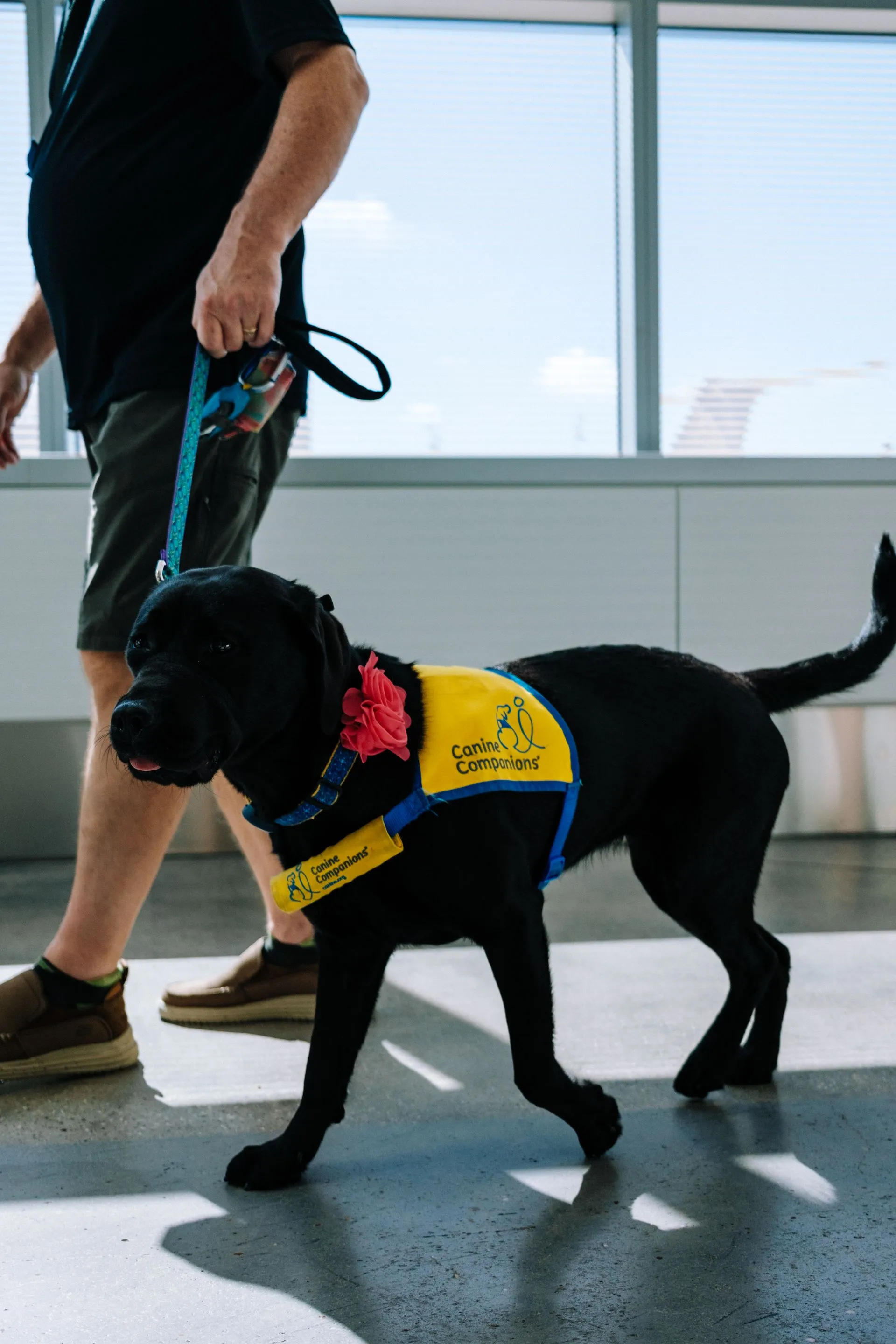
No federal public-access right attaches to an emotional support animal. The ADA’s access rules are about service animals, dogs individually trained to perform work or tasks, and the distinction is not a formality. A business that lets a service dog in is following a different statute from the one that governs your apartment.
Our comparison of the two categories walks where they diverge, and it is worth reading before an argument at a door rather than after.
5. “Breed and weight limits don’t apply.”, True, with a real exception
Blanket rules do not apply to an approved assistance animal. A building that excludes certain breeds, or animals over a weight, cannot apply that policy to the animal in an approved accommodation.
The exception is individual rather than categorical. A provider may act where the specific animal is a direct threat to health or safety that another accommodation cannot reduce, or would cause substantial physical damage, 24 C.F.R. § 100.202(d). The test is conduct. A documented bite is conduct. A breed’s reputation is not, and neither is a neighbour’s discomfort.
Which is why the practical advice runs the other way from the argument people expect: stop debating the breed, and document the animal. Vet records, training, a reference from a previous landlord. The pet behaviour disclosure screener builds a short summary for exactly that conversation.
6. “You can never be charged anything.”: Half true
Animal-specific charges come off once the accommodation is approved: pet rent, pet deposits, non-refundable pet fees, breed or weight surcharges. That is what it means for the animal not to be a pet for lease purposes.
What stays is everything that applies to you as a tenant. You are liable for damage the animal actually causes, on the ordinary terms of your lease. Requirements applied to everyone in the building: renters insurance, local animal licensing, vaccination, leash and clean-up rules: still apply too. The line is between paying in advance because an animal exists, which is out, and paying for something that happened, which is not.
If you want to know which side of that line a clause in your own lease falls on, the apartment pet rules explainer reads a pasted policy clause by clause.
7. “Any letter from any site works.”: False, and expensively so
The document has to be reliable to do its job, and reliability has a shape a housing provider can check: a licensed professional, licensed where you live, who actually evaluated you, with license details on the letterhead and a way to reach them. A PDF generated after a two-minute questionnaire fails on the first and often on all four.
This is the claim with the worst consequences, because the failure happens at the point of maximum cost, after you have committed to a building, or during a dispute. Run any letter you already hold through the ESA letter checker before it goes anywhere near a landlord.
Why are crowd-sourced ESA answers so often wrong?
Three of these are about paperwork that does not exist: registries, certificates, sites that promise approval. Three are about limits that do exist but are narrower or wider than the claim. And one, the ten-day rule, is a fact that used to be true enough and no longer is.
That is the reliable weakness of crowd-sourced answers: they age. A comment written in 2021 about HUD guidance is not annotated when the guidance is withdrawn in 2025, and the upvotes do not update either. Use the thread to find out that your problem has a name, then check the rule against a source that carries a date: your state’s statute, the C.F.R. section, or a guide that cites both. The ESA rights map is the fastest way to see what your own state adds on top of the federal floor.
Frequently Asked Questions
Is there an official ESA registry in the United States?
No federal or state registry exists, and no housing provider is entitled to require one. The document the framework evaluates is a letter from a licensed professional; a registration or ID card is a purchase, not evidence.
How quickly does a landlord have to answer a request?
Federal law sets no fixed deadline. The ten-day figure that circulates came from HUD guidance that was withdrawn effective September 17, 2025, at 91 FR 17291. Silence still needs chasing in writing, because your own complaint deadlines run from the refusal.
Can a landlord ban my animal because of its breed?
A blanket breed rule does not apply to an approved assistance animal. A refusal has to rest on what that specific animal has done: a direct threat or substantial physical damage, judged individually under 24 C.F.R. § 100.202(d).
Do I have to tell my landlord my diagnosis?
No. Asking whether a person has a disability, or about its nature or severity, is unlawful under 24 C.F.R. § 100.202(c). A proper letter confirms a disability-related need without naming the condition behind it.
Share this guide
Support Animal Editorial Team
Reviewed by licensed providers
The Support Animal editorial team researches ESA and PSA regulations nationwide. Every guide is fact-checked against federal and state law and reviewed by licensed providers before publication.